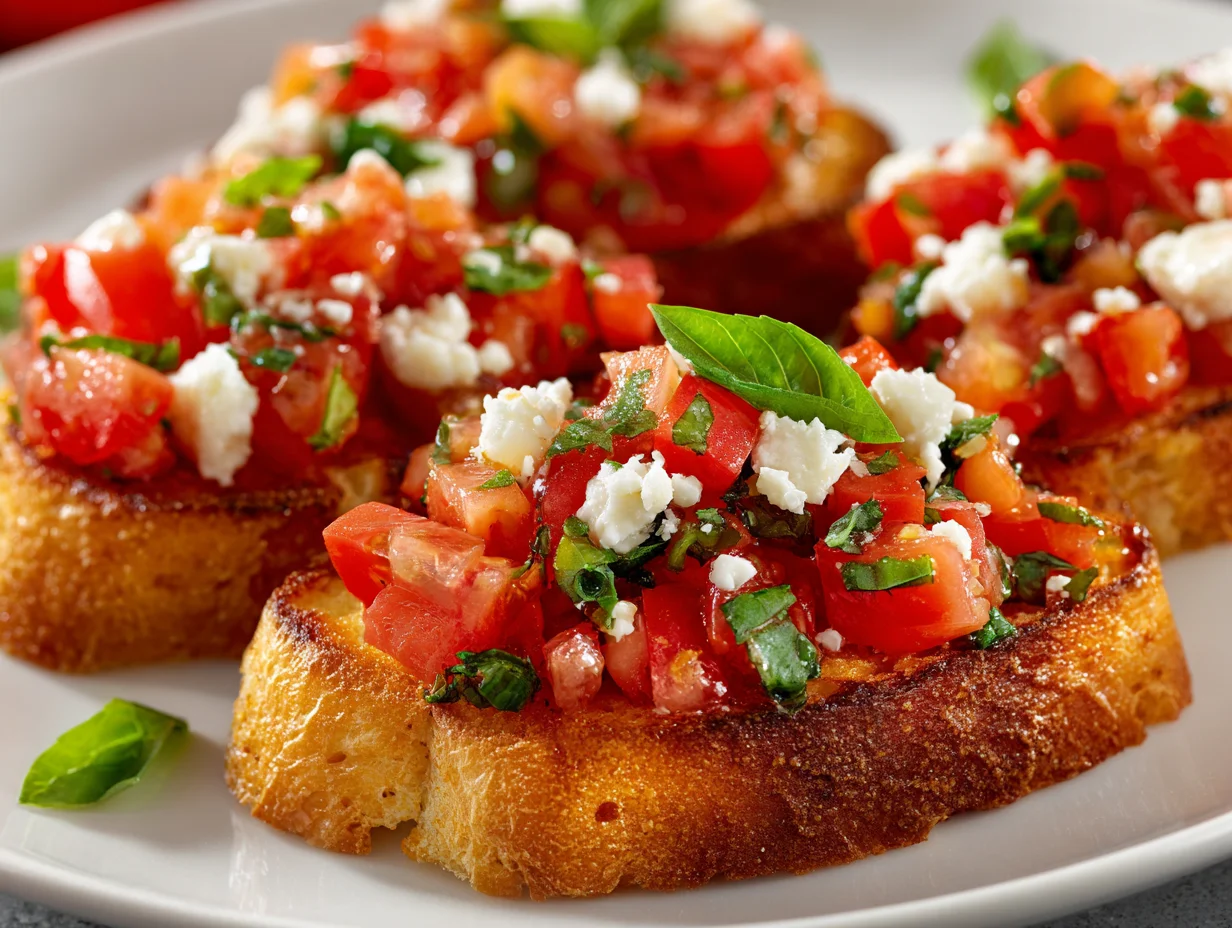
Classic bruschetta is one of those preparations where restraint matters more than complexity. In its most authentic form, it reflects the discipline of Italian cooking,few ingredients, handled correctly, producing a result that feels complete.
The foundation is simple: toasted bread, ripe tomatoes, fresh basil, garlic, and high-quality olive oil. Yet the outcome depends entirely on technique, timing, and balance. The bread must be crisp enough to hold structure, while still warm enough to absorb flavor without collapsing. The topping should feel fresh and lightly seasoned, never heavy or watery.
When executed properly, bruschetta becomes more than an appetizer; it becomes a study in texture contrast and ingredient respect, where every bite delivers clarity, freshness, and controlled richness without unnecessary complication.
? If you love fresh Mediterranean flavors, you’ll also enjoy our Classic Caprese Salad Recipe with Tomato Mozzarella and Basil.
Excess Moisture in Tomato Preparation
A frequent error in bruschetta preparation is allowing excess moisture to remain in the tomato mixture. This usually happens when tomatoes are chopped and immediately mixed with salt and olive oil without proper draining or resting time.
From a professional standpoint, this leads to an imbalance in texture and structure. The liquid released from the tomatoes quickly saturates the toasted bread, breaking its crisp surface and turning it soft and unstable. Instead of a clean contrast between crunch and freshness, the dish becomes heavy and soggy.
It also weakens seasoning intensity, as excess water dilutes the natural flavor of garlic, basil, and olive oil. This mistake ultimately affects the intended identity of bruschetta, where controlled moisture is essential for maintaining clarity in both texture and taste.
Controlled Tomato Handling for Structural Balance
The correction begins with disciplined preparation of the tomato base. Tomatoes should be properly deseeded and lightly drained before mixing to reduce excess liquid while preserving natural flavor. After chopping, allowing them to rest briefly in a sieve helps release unnecessary moisture in a controlled manner.
Seasoning should be introduced gradually, ensuring that salt does not immediately draw out too much water. Olive oil should be added in measured quantities to maintain structure rather than create looseness. Garlic and basil must be balanced carefully to enhance aroma without overpowering freshness.
When handled correctly, the tomato mixture becomes cohesive and lightly juicy rather than watery. This ensures the topping adheres properly to the toasted bread, preserving crispness while delivering a clean, structured burst of flavor in every bite.
Ingredients List
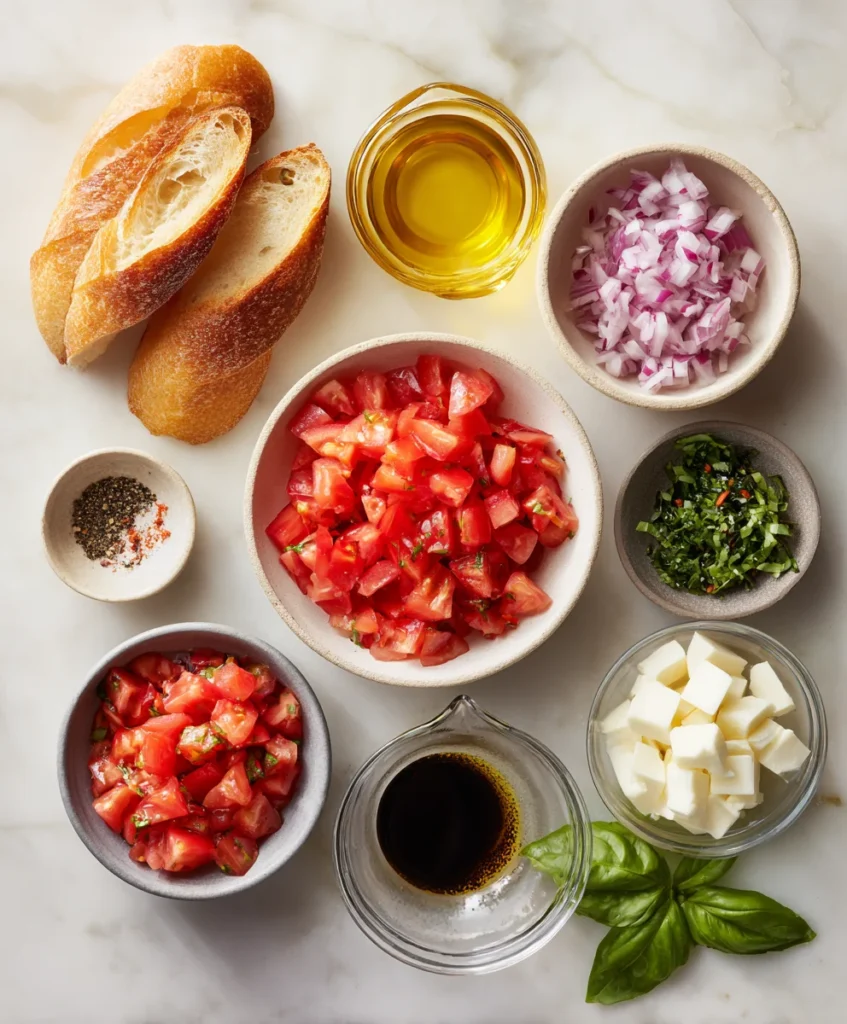
Base Ingredients:
- 1 baguette or rustic Italian bread (sliced)
- 3–4 ripe tomatoes (diced, deseeded)
- 2–3 garlic cloves (minced)
- Fresh basil leaves (chopped)
- 3 tbsp extra virgin olive oil
- Salt to taste
- Black pepper to taste
- Optional: balsamic glaze
Optional Add-ins:
- Fresh mozzarella
- Finely chopped red onion
- Chili flakes
- Avocado slices
- Parmesan cheese
Step-by-Step Instructions
Preparing the Bread Foundation
The process begins with selecting a structurally sound bread, typically a rustic loaf or baguette, capable of supporting moisture without collapsing. Slices should be cut evenly to ensure consistent toasting. Light brushing with olive oil is applied to enhance surface flavor and encourage controlled browning. The bread is then toasted until it achieves a crisp exterior while retaining a slight internal softness. This balance is critical, as the base must withstand the moisture of the topping while still providing a clean bite. Over-toasting should be avoided, as it leads to excessive dryness that disrupts overall texture harmony. The goal is a stable, golden foundation that supports the topping without losing structural integrity during serving.
Building the Tomato Mixture
The tomato mixture must be treated with precision rather than casual mixing. Tomatoes are first deseeded and lightly drained to remove excess water content. They are then combined with finely minced garlic and freshly chopped basil. Olive oil is introduced gradually to avoid breaking the structure of the mixture. Seasoning is applied carefully, ensuring salt enhances flavor without drawing out excessive moisture too early. The mixture should be gently folded rather than aggressively stirred to preserve texture. The final result should appear fresh, cohesive, and lightly glossy, with controlled juiciness rather than pooling liquid. This step defines the overall quality of the bruschetta, as improper handling at this stage directly impacts the final texture.
? For another easy appetizer idea, try our Cheesy Caprese Dip Recipe, perfect for gatherings and parties.
Assembly with Timing Control
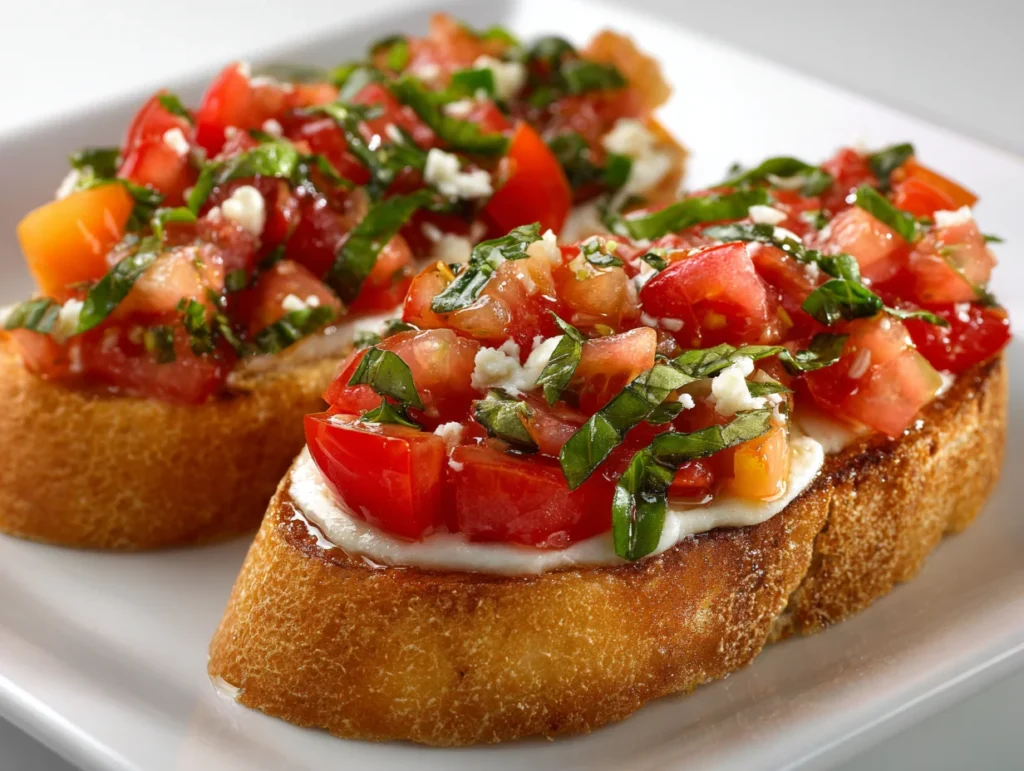
Assembly must be executed immediately before serving to preserve contrast between crisp bread and fresh topping. Each toasted slice is topped with a measured portion of the tomato mixture, ensuring even distribution without overloading. The goal is controlled layering rather than saturation. If additional elements such as cheese or glaze are used, they should be applied sparingly to maintain balance. Timing is essential, as premature assembly results in moisture transfer that compromises texture. Proper execution ensures that the bread retains its structure while the topping remains vibrant and fresh. Visually, each piece should reflect clear separation between base and topping, demonstrating precision and restraint in plating.
Final Presentation
Once assembled, bruschetta should be served immediately to preserve its intended texture profile. Presentation should emphasize simplicity, with clean arrangement that highlights freshness and color contrast. Garnishing with basil may be used sparingly for visual enhancement. This final stage is about maintaining integrity rather than adding complexity. Properly executed bruschetta delivers a controlled balance of crisp bread and fresh topping, where each bite reflects deliberate technique and ingredient respect rather than excess.
Cook Time
Total: 15 minutes
Prep: 10 minutes
Bake: 5 minutes
Servings
This recipe serves approximately 4 to 6 people as an appetizer. Portioning should be consistent to maintain balance between bread and topping across servings. In professional service, bruschetta is often prepared in batches but assembled individually to ensure texture control. Each portion is designed to deliver a single, complete bite profile that reflects freshness and structural contrast. It works well as a starter in multi-course meals or as part of shared dining arrangements where light, fresh elements are preferred.
Makes approximately 12–16 pieces
Nutritional Information (approx. per serving)
- Calories: 140–180
- Carbohydrates: 18–22 g
- Fat: 6–10 g
- Protein: 3–5 g
- Fiber: 2–3 g
From a nutritional perspective, bruschetta offers a balanced light appetizer profile. Olive oil provides healthy fats, while tomatoes contribute antioxidants and natural acidity. Garlic and basil enhance both flavor complexity and functional nutritional value. The bread supplies energy through carbohydrates, making the dish satisfying without being heavy. When consumed as part of a balanced meal, it supports freshness-focused eating with minimal processing.
? You might also enjoy our Homemade Garlic Bread Recipe, a crispy and flavorful side that pairs beautifully with bruschetta.
Storage Instructions
Bruschetta is best consumed immediately after preparation to maintain its intended texture contrast. However, components can be stored separately under controlled conditions. The tomato mixture should be refrigerated in an airtight container and used within 24 hours to preserve freshness. Toasted bread should be stored in a dry container at room temperature to avoid moisture absorption. Combining both components in advance is not recommended, as it leads to structural breakdown and loss of crispness. Proper separation ensures that each element retains its quality until final assembly, maintaining the intended culinary standard.
Suggestions
For enhanced refinement, use ripe seasonal tomatoes for better natural sweetness and acidity balance. A light drizzle of balsamic reduction can add depth without overwhelming freshness. Cheese additions such as mozzarella or parmesan should be used sparingly to maintain structural clarity. Bruschetta pairs well with soups or salads, making it suitable for layered meal planning. Adjusting garlic intensity allows customization based on preference, while herb variations can subtly shift flavor direction. Maintaining ingredient quality remains the most important factor in achieving a consistent professional result.
Seasonal Relevance
Bruschetta aligns most strongly with spring and summer when tomatoes are at peak flavor and natural sweetness. During these seasons, the dish requires minimal enhancement, relying on ingredient quality rather than adjustment. In cooler months, it can still be prepared using carefully selected tomatoes, though flavor intensity may vary. Its light and fresh profile makes it especially suitable for warm-weather dining, outdoor gatherings, and appetizer courses where brightness and simplicity are preferred.
Classic bruschetta represents disciplined simplicity in culinary practice. Its success depends on precise handling of moisture, careful ingredient balance, and strict timing during assembly. When these elements are respected, the dish delivers a clear contrast of crisp bread and fresh topping that reflects authentic Italian technique. It is a preparation that rewards attention to detail, demonstrating how minimal ingredients can achieve refined and expressive results when executed with control and consistency.
? If you enjoy simple Italian-style dishes, check out our Classic Marinara Sauce Recipe with Fresh Tomatoes for rich homemade flavor.
Frequently asked Questions
1. Can bruschetta be prepared in advance?
The tomato mixture can be prepared ahead of time, but bread should always be toasted fresh and assembly done just before serving to maintain texture integrity and prevent sogginess.
2. What bread works best for bruschetta?
Rustic Italian bread or baguette is preferred due to its firm structure, which holds toppings well while maintaining a crisp exterior after toasting.
3. How do I stop bruschetta from becoming watery?
Properly deseeding and draining tomatoes is essential. Allowing them to rest before mixing also reduces excess moisture and helps maintain balance.
4. Can canned tomatoes be used instead of fresh ones?
Fresh tomatoes are strongly recommended as canned varieties contain additional liquid that affects texture and weakens structural stability.
5. Should bruschetta be served hot or cold?
The bread should be served warm and toasted, while the topping is best kept at room temperature to maintain freshness and flavor balance.