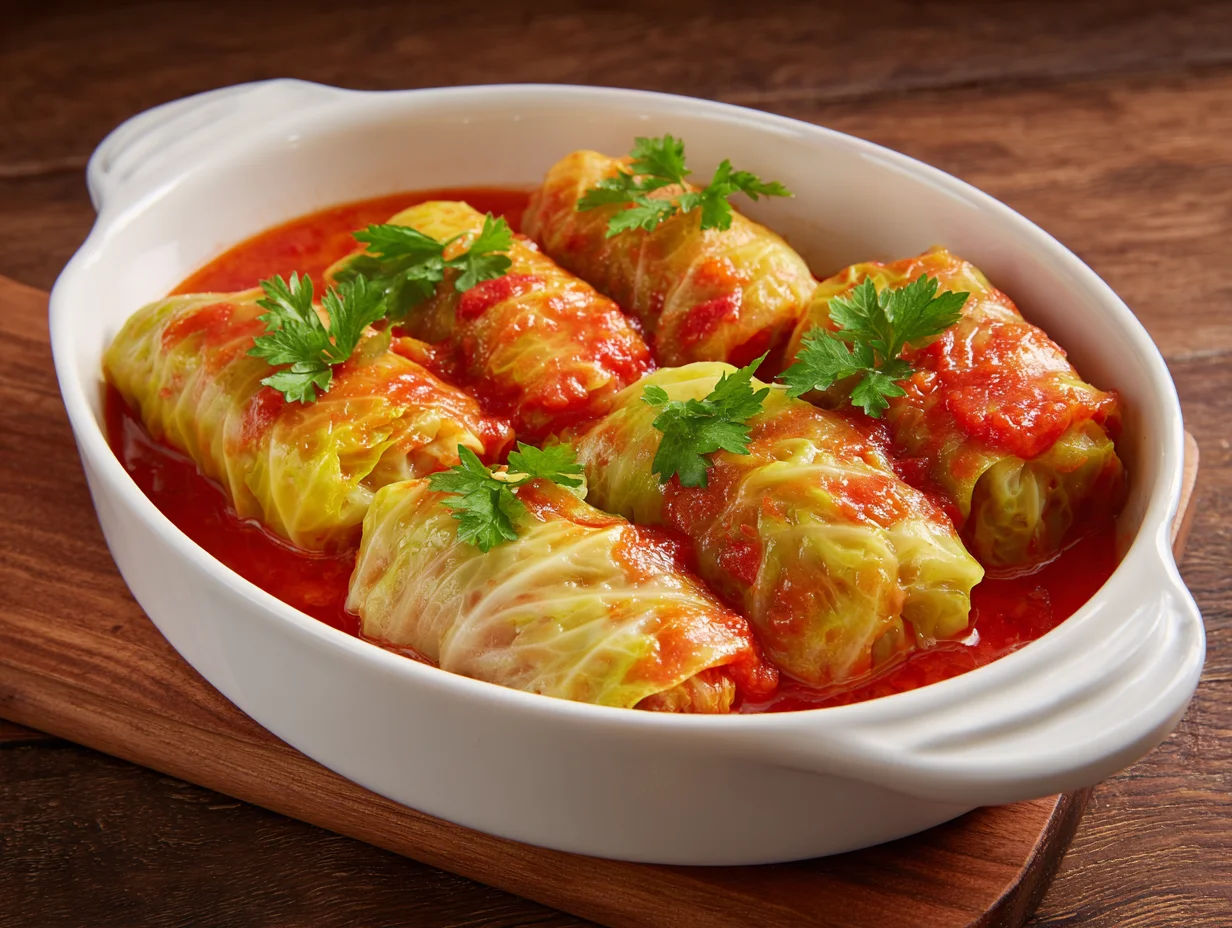
In my experience as a chef, Soft Cabbage Rolls with Rich Filling represent one of the most disciplined yet rewarding comfort dishes in traditional cooking. This recipe is not about speed; it is about control, layering, and respect for ingredients.
Tender cabbage leaves are gently prepared to wrap a seasoned filling of meat, rice, herbs, and aromatics, then slowly simmered in a rich tomato sauce that ties everything together. What makes this dish exceptional is the transformation that happens during slow cooking,simple ingredients turn into something deeply flavorful and cohesive.
Each roll is structured, soft, and satisfying, carrying both texture and warmth. When executed properly, it delivers a balanced plate that feels rustic, nourishing, and professionally refined at the same time, making it a true staple in comfort food cuisine.
? If you enjoy hearty comfort meals with cabbage, you’ll also love our Cabbage and Sausage Recipe – Quick 30 Minute Dinner
Overstuffing the Cabbage Leaves During Rolling
One of the most frequent mistakes I see, even among experienced home cooks, is overstuffing cabbage leaves. It often comes from the desire to make each roll “hearty,” but it actually works against the dish. When too much filling is added, the leaf cannot close properly, which leads to tearing during rolling or bursting while cooking.
This also prevents even heat distribution inside the roll, leaving parts undercooked and others overdone. Overstuffed rolls tend to lose their structure in the pot, breaking apart and mixing into the sauce. Instead of neat, elegant portions, you end up with a loose, uneven mixture.
This single mistake compromises both presentation and texture, turning a carefully built dish into something messy and inconsistent.
Mastering Proper Portion Control for Perfect Rolls
In professional kitchens, portion control is treated as a core technique rather than a suggestion. For cabbage rolls, the filling must always be measured and consistent. I recommend using a small spoon or scoop to ensure each leaf receives the same amount of mixture.
The goal is to create a compact cylinder that can be fully enclosed without stress on the leaf. Once placed, the sides should fold neatly before rolling forward with gentle pressure. This ensures the structure remains tight but not strained. Proper spacing inside the pot also matters, as overcrowding can undo careful rolling.
When portion control is respected, every roll cooks evenly, holds its shape, and delivers the intended balance of cabbage, filling, and sauce in every bite.
Ingredients List
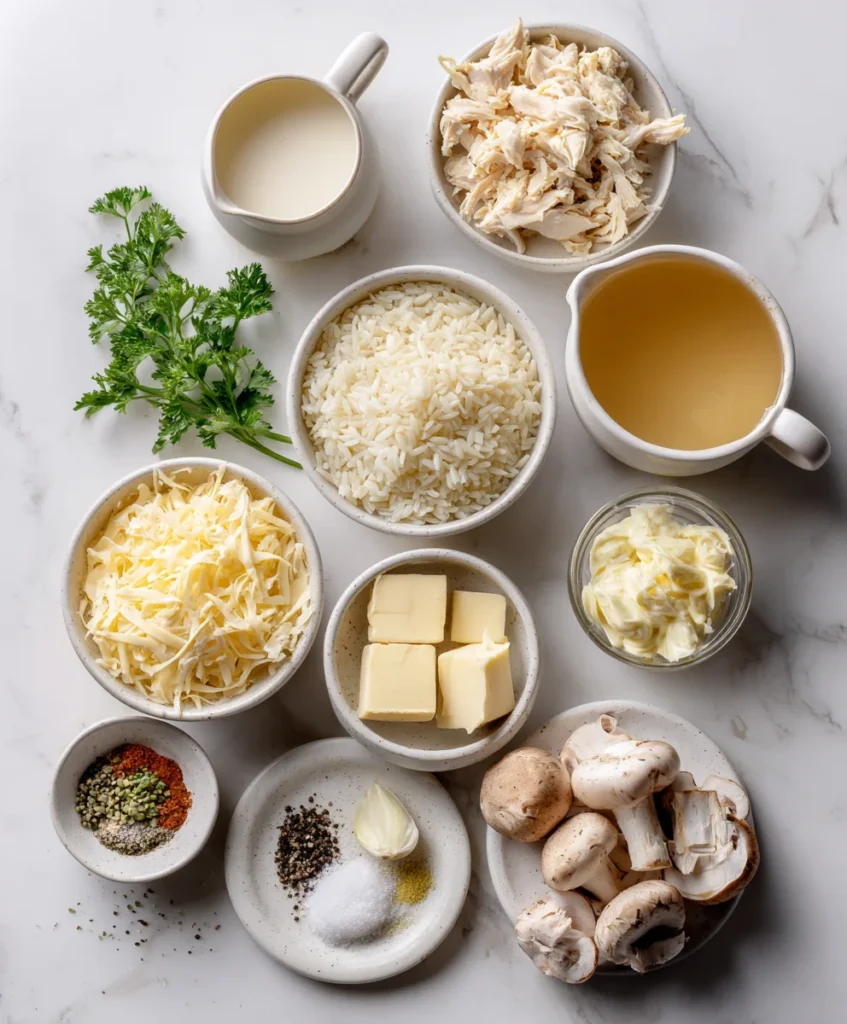
Base Ingredients:
- 1 large green cabbage
- 500g ground beef or chicken
- 1 cup cooked rice
- 1 medium onion, finely chopped
- 2–3 garlic cloves, minced
- 1 egg
- 2 tbsp olive oil
- Salt and black pepper to taste
- 1 tsp paprika
Optional Add-ins:
- Fresh parsley, chopped
- 2 tbsp tomato paste
- Chili flakes for heat
- Grated carrot
- Lemon juice for brightness
Step-by-Step Instructions
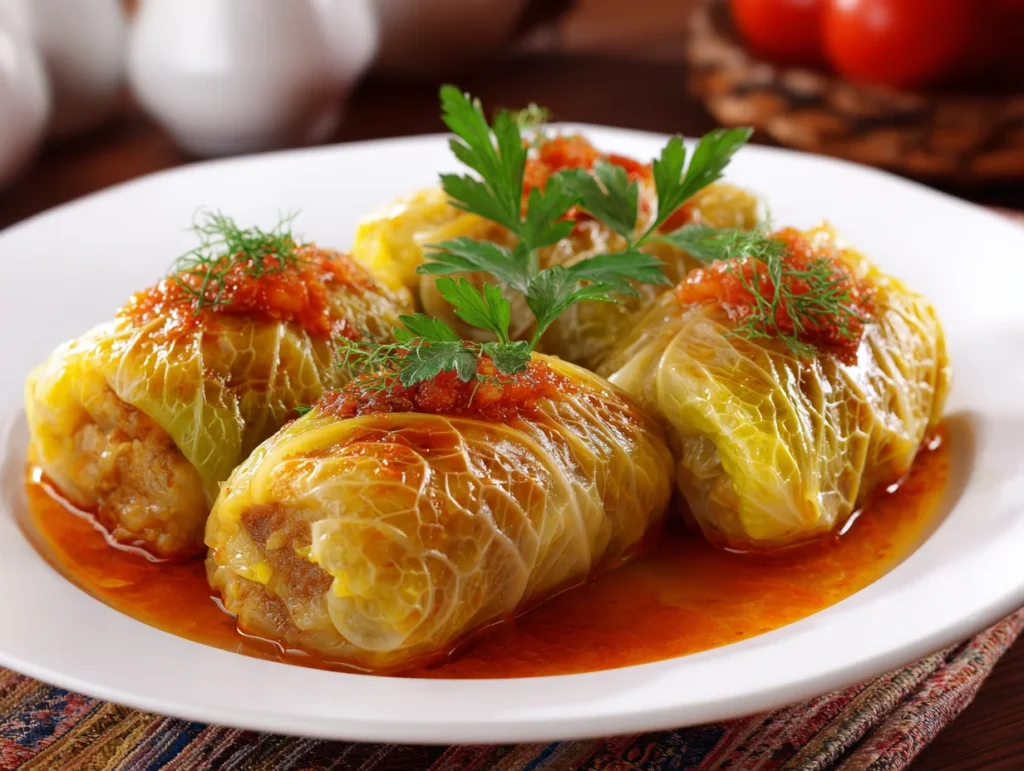
Preparing the Cabbage with Precision
I always begin by selecting a firm, fresh cabbage because structure matters from the very start. The core is carefully removed so the leaves can separate without damage. The cabbage is then gently blanched in salted water, not rushed, just enough to soften the leaves while maintaining their strength.
I remove each leaf as it loosens naturally, avoiding force that causes tearing. Immediately after blanching, I transfer them into ice water to stabilize texture and stop residual cooking.
This step is essential because it determines how well the rolls will hold later. Finally, I trim the thick central vein of each leaf to ensure flexibility. When done correctly, the cabbage becomes soft enough to roll yet strong enough to protect the filling during cooking.
? For more stuffed-style comfort food ideas, try our Easy Stuffed Shells Recipe
Building a Balanced and Structured Filling
The filling is where discipline truly matters. I combine ground meat, cooked rice, onion, garlic, egg, and seasoning in a large bowl, mixing until the texture becomes uniform and slightly sticky. This binding is important because it ensures the filling holds together inside the cabbage leaf.
I avoid over-mixing, as it can make the texture dense and heavy. Seasoning is adjusted carefully to ensure the mixture is flavorful on its own, not dependent on the sauce. At this stage, I always let the filling rest briefly so the ingredients settle and integrate.
A well-prepared filling should be moist, structured, and easy to shape. If it feels too loose or too dry, adjustments are made before rolling begins.
Rolling with Control and Consistency
Rolling cabbage is a technical step that requires patience. I place a measured portion of filling near the base of each leaf and fold the sides inward before rolling forward. The key is controlled tension,firm enough to hold shape, but not tight enough to tear the leaf. Each roll must be consistent in size so they cook evenly later. I always place them seam-side down in the pot to lock them in position.
This prevents unraveling during simmering. Arrangement is done carefully, layer by layer, ensuring they are snug but not compressed. When done correctly, the rolls maintain their structure throughout cooking, creating a uniform and professional appearance that reflects proper technique and attention to detail.
Slow Cooking in Rich Tomato Sauce
For me, this is where the recipe develops its identity. I prepare a simple tomato-based sauce and pour it evenly over the arranged cabbage rolls until partially submerged. The pot is then covered and cooked on low heat to allow gradual flavor absorption.
I avoid stirring completely because movement can break the structure of the rolls. Instead, I focus on maintaining steady heat so the sauce thickens naturally and coats each roll. During this process, the cabbage softens further while the filling becomes deeply infused with the sauce. The final result is a cohesive dish where every component blends without losing individuality. Slow cooking is not optional here,it is the element that transforms the dish from simple preparation into a complete culinary experience.
Cook Time
Total: 1 hour 20 minutes
Prep: 25 minutes
Bake: 55 minutes
Servings
In my kitchen, this recipe is designed to serve a family of four to five comfortably, depending on portion size. Each serving typically includes several cabbage rolls coated in rich tomato sauce, making it a complete and satisfying meal. I consider this dish ideal for shared dining because it naturally encourages portion sharing and table-style serving. It works equally well for weekday dinners or planned family gatherings. The structure of the recipe ensures consistency across servings, so every plate carries the same balance of flavor and texture. It is filling enough to stand alone without additional sides, though it pairs beautifully with simple bread or salad when needed.
Nutritional Information (approx. per serving)
- Calories: 320 kcal
- Protein: 22g
- Carbohydrates: 20g
- Fat: 18g
- Fiber: 4g
From a nutritional perspective, this dish offers a balanced profile that supports both energy and satisfaction. The protein content supports muscle maintenance, while cabbage contributes fiber and digestive support. Rice provides steady carbohydrates, and the moderate fat content enhances flavor without heaviness. I often highlight this recipe as a practical example of comfort food that does not rely on excess richness. When prepared properly, it delivers nourishment alongside taste, making it suitable for regular family meals without feeling overly indulgent.
? If you like oven-baked filled vegetables, our Simple Chicken Stuffed Peppers Recipe is a perfect match
Storage Instructions
I always recommend storing cabbage rolls in their sauce to preserve moisture and flavor integrity. Once cooled, they should be placed in an airtight container and refrigerated. They remain fresh for up to three days and often improve in taste as the flavors continue to develop. For longer storage, freezing is highly effective, especially when portioned individually. When reheating, I prefer gentle heat on the stove rather than high microwave power, as slow reheating preserves structure. Adding a small amount of water or sauce helps restore original texture. Proper storage ensures that the dish retains both its softness and depth of flavor even after reheating.
Suggestions
In my professional approach, I always encourage small refinements that elevate the final dish. A light drizzle of olive oil before serving enhances richness, while fresh herbs like parsley add brightness. For a deeper flavor profile, a touch of smoked paprika or a hint of chili can be incorporated into the sauce. Serving alongside mashed potatoes or rustic bread creates a more complete dining experience. I also recommend experimenting with different proteins or even vegetarian fillings for variation. These adjustments allow the recipe to remain traditional while adapting to personal preference without losing its core identity.
Seasonal Relevance
This dish performs best in cooler months when hearty, slow-cooked meals are most appreciated. Autumn and winter naturally highlight its comforting qualities, as the warm sauce and soft texture provide satisfaction during colder days. However, I do not limit it strictly by season because cabbage is available year-round. In warmer months, I sometimes lighten the sauce slightly to keep the dish more refreshing. Its adaptability is one of its strengths, allowing it to remain relevant across seasons while still delivering consistent comfort and depth.
Soft Cabbage Rolls with Rich Filling is a dish that reflects patience, precision, and respect for traditional cooking methods. From careful cabbage preparation to structured rolling and slow simmering, every stage contributes to the final outcome. In my experience, success in this recipe comes not from complexity but from attention to detail. When properly executed, the rolls hold their shape, deliver balanced flavor, and offer a deeply satisfying eating experience. It is a dish that rewards discipline and technique, making it a reliable staple for both everyday meals and special family gatherings.
? For rich and slow-cooked comfort flavors, don’t miss the Best Beef Stew Recipe
Frequently asked questions
1. Can I prepare cabbage rolls in advance?
Yes, cabbage rolls can be prepared a day ahead and stored in the refrigerator before cooking. This actually improves flavor as the filling ingredients settle and blend. Keep them covered tightly to maintain moisture. When ready, simply add sauce and cook slowly. They also freeze well for future use.
2. What is the best meat for cabbage rolls?
Ground beef is most commonly used, but chicken, turkey, or lamb also work well. Each provides a slightly different flavor profile. Lean meat is preferred to avoid excessive grease. Combining meat with rice ensures a balanced texture and prevents dryness during cooking.
3. Why do my cabbage rolls fall apart?
This usually happens due to overcooked cabbage or loose rolling technique. If leaves are too soft or filling is not properly bound, rolls may break. Proper blanching and controlled rolling are essential. Placing them seam-side down also helps maintain structure.
4. Can I make a vegetarian version?
Yes, vegetarian versions work very well using lentils, mushrooms, or rice-based fillings. Proper seasoning becomes more important in meat-free versions. Herbs, spices, and tomato sauce help maintain depth of flavor while keeping the dish hearty and satisfying.
5. Do cabbage rolls taste better the next day?
In my experience, yes. Resting overnight allows flavors from the filling and sauce to fully integrate into the cabbage. The result is a richer, more unified taste. Gentle reheating enhances texture and often makes the dish even more enjoyable than when freshly made.