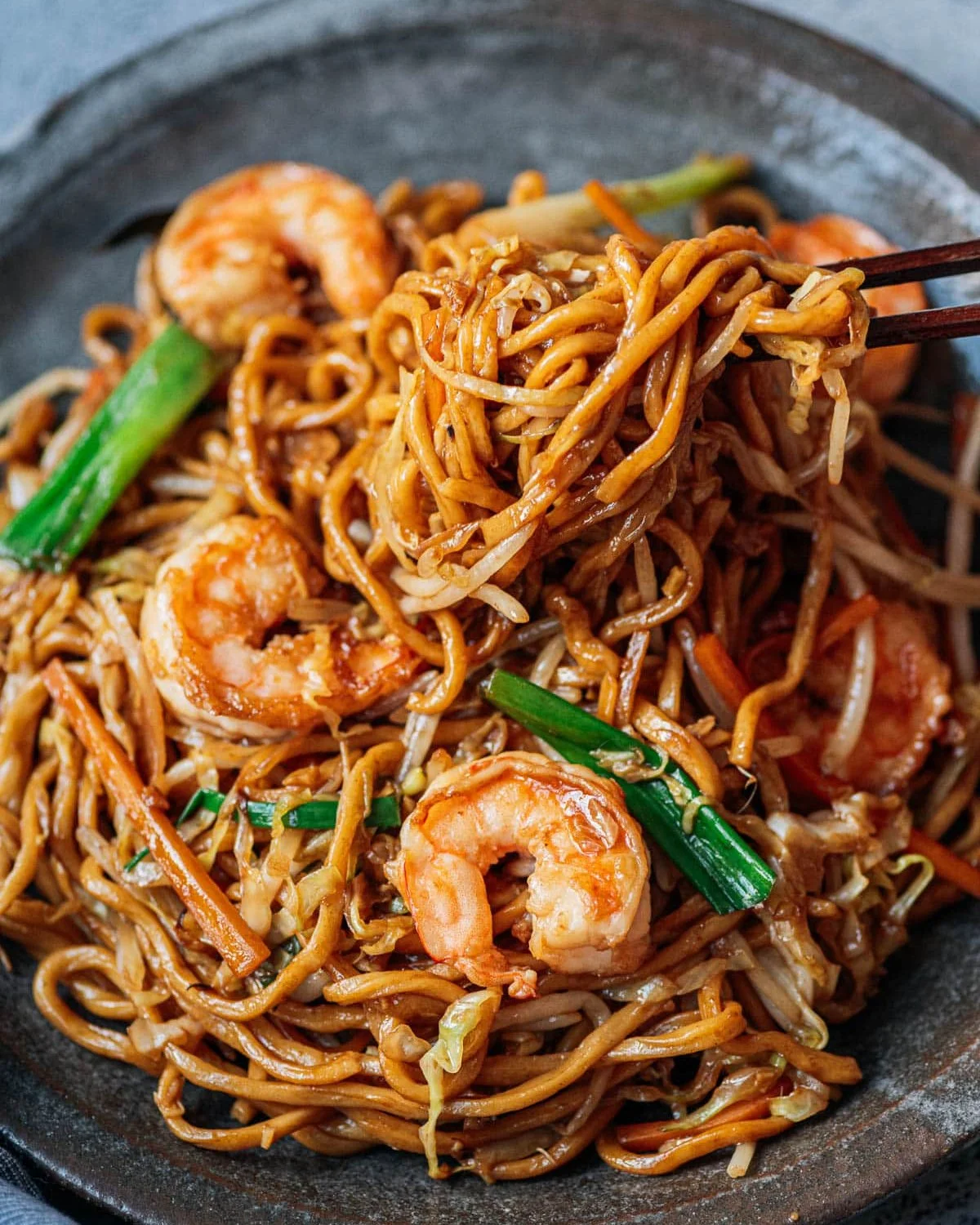
There is a particular kind of magic that happens when a hot wok meets a tangle of noodles, plump shrimp, and a glossy, savory sauce. It takes less than thirty minutes, yet it tastes like something you would order from your favorite takeout spot on a Friday night. This Easy Shrimp Lo Mein recipe strips away the guesswork and gives you restaurant-quality results in your own kitchen.
Forget soggy noodles or bland, watery sauce. This version relies on a few smart techniques: cooking the shrimp separately so it stays tender, building a sauce with real depth from soy sauce and sesame oil, and tossing everything together at high heat for that unmistakable wok-fried flavor.
You do not need a professional kitchen or exotic ingredients to pull this off. A large skillet or wok, a handful of pantry staples, and about twenty-five minutes are all it takes to bring this dish to your table.
Whether you are cooking for a busy weeknight or craving something better than delivery, this recipe delivers every single time. Let’s get into exactly what you need and how to make it happen.
Ingredients You’ll Need
Great lo mein starts with balance — a little sweetness, a little salt, a little heat, and noodles that soak up every drop of sauce without turning mushy.
One of the things I love about this recipe is that it uses simple pantry ingredients. You probably already have most of them in your kitchen.
Base Ingredients
- 8 oz lo mein noodles (or spaghetti as a substitute)
- 1 lb large shrimp, peeled and deveined
- 2 tablespoons vegetable oil, divided
- 1 cup shredded carrots
- 1 cup thinly sliced cabbage
- 1/2 cup sliced bell peppers
- 3 cloves garlic, minced
- 1 teaspoon fresh ginger, grated
- 3 tablespoons soy sauce
- 1 tablespoon oyster sauce
- 1 teaspoon sesame oil
- 1 teaspoon brown sugar
- 2 green onions, sliced
Optional Add-ins
- 1/2 cup snap peas
- 1/2 cup sliced mushrooms
- 1 teaspoon sriracha or chili garlic sauce
- 1 tablespoon toasted sesame seeds
- 1/4 teaspoon white pepper
- 1/2 cup bean sprouts
Step-by-Step Instructions
Cook the Noodles
Bring a large pot of salted water to a boil and cook the lo mein noodles according to package instructions, usually around four to five minutes. Drain them well and toss with a small drizzle of oil to prevent sticking. Set the noodles aside while you prepare the shrimp and vegetables. This step can be done first so everything else comes together quickly once the wok is hot, keeping the whole process smooth and stress-free.
Sear the Shrimp
Heat one tablespoon of vegetable oil in a large skillet or wok over medium-high heat. Add the shrimp in a single layer and cook for about two minutes per side, until pink and just cooked through. Avoid overcrowding the pan, as this causes steaming rather than searing. Remove the shrimp to a plate immediately. This quick, hot sear locks in juiciness and prevents the shrimp from turning rubbery later in the cooking process.
Stir-Fry the Vegetables
In the same pan, add the remaining oil along with garlic and ginger, stirring for about thirty seconds until fragrant. Add the carrots, cabbage, and bell peppers, stir-frying over high heat for three to four minutes. The vegetables should stay crisp-tender, not soft. This fast, high-heat method preserves color, crunch, and nutrients while building the aromatic base that makes lo mein taste so distinctly different from a basic noodle stir-fry.
Build the Sauce
Whisk together soy sauce, oyster sauce, sesame oil, and brown sugar in a small bowl until the sugar dissolves completely. Pour this mixture directly into the pan with the vegetables, stirring to coat everything evenly. Let it bubble gently for about one minute so the flavors concentrate slightly. This balanced sauce is the backbone of the dish, delivering that signature savory-sweet profile found in classic takeout-style lo mein.
Combine and Toss
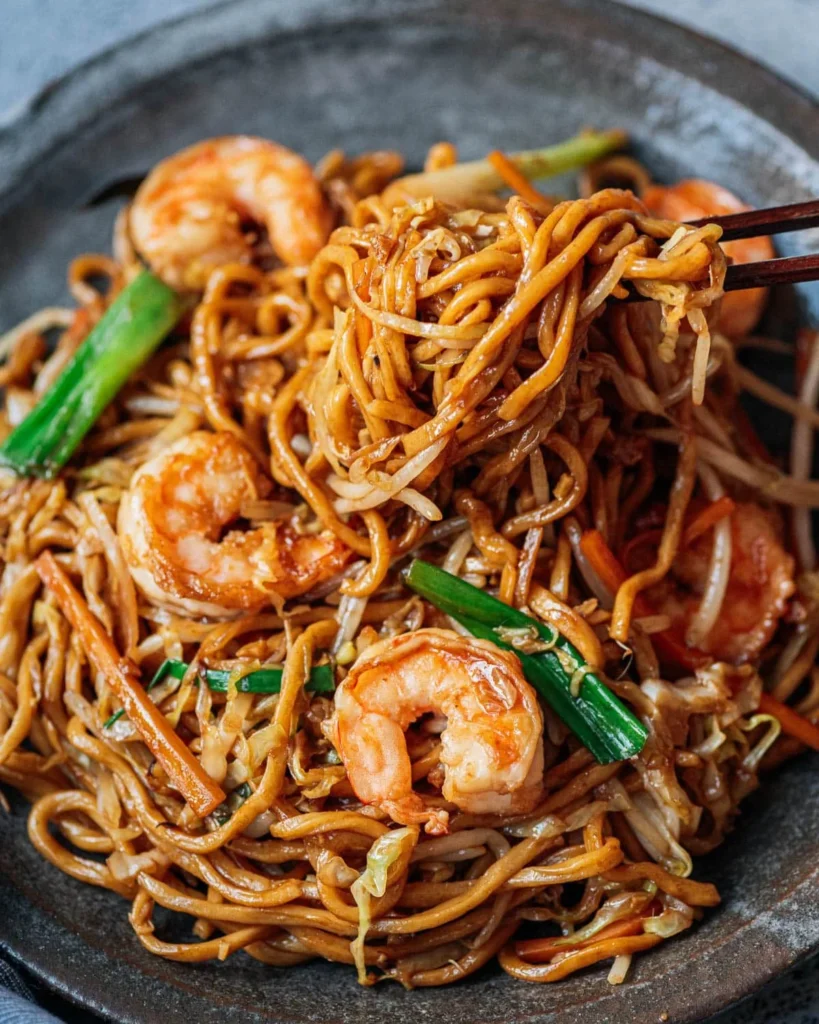
Return the cooked shrimp to the pan, then add the drained noodles. Using tongs, toss everything together for two to three minutes, making sure the sauce coats every strand and every piece evenly. Cook until heated through and slightly glossy. Finish with sliced green onions. Serve immediately while hot, as lo mein is best enjoyed fresh off the stove with all its texture intact.
Cook Time
Total
25 minutes
Prep
10 minutes
Bake
Not applicable (stovetop recipe)
Servings
This recipe makes approximately 4 generous servings, making it ideal for a family dinner or a satisfying weeknight meal for two with leftovers to spare. Each portion balances protein, vegetables, and noodles in a way that feels complete without needing a side dish.
If you are cooking for a larger group, this recipe scales easily. Simply double the ingredients and use a wider pan or work in batches to maintain that essential high-heat sear on both the shrimp and vegetables.
For meal prep purposes, portion the lo mein into airtight containers immediately after cooking. This keeps texture and flavor intact for lunches throughout the week, giving you four ready-to-eat meals with minimal effort.
Common Mistakes in This Recipe
The most frequent mistake home cooks make is overcooking the shrimp before it ever hits the final toss. Shrimp continues cooking slightly from residual heat, so pulling it too late results in a tough, rubbery texture that ruins an otherwise perfect dish.
Another common issue is overcrowding the pan during both the shrimp searing and vegetable stir-frying stages. This traps steam, preventing the caramelization and slight char that gives lo mein its signature restaurant flavor.
Using the wrong noodle type or overcooking them in boiling water is another pitfall. Mushy, overcooked noodles fall apart during tossing and cannot properly absorb the sauce.
Finally, many cooks add the sauce too early or let it simmer too long, causing it to reduce excessively and turn overly salty or sticky rather than silky and balanced.
Solutions to Common Mistakes
To avoid rubbery shrimp, cook it only until it turns pink and slightly curled, then remove it from heat immediately. It will finish cooking gently when tossed back in with the hot noodles later.
Prevent overcrowding by cooking shrimp and vegetables in batches if your pan is small. A properly sized wok or skillet allows heat to circulate, giving you that authentic seared, smoky flavor.
Cook noodles just until al dente, one minute less than the package suggests, since they will continue softening slightly when tossed with the hot sauce and other ingredients.
Add the sauce only after the vegetables are stir-fried and let it bubble briefly, just long enough to combine, rather than reduce. This keeps the flavor balanced and prevents excess saltiness.
Nutritional Information (approx. per serving)
- Calories: 380 kcal
- Protein: 24g
- Carbohydrates: 45g
- Fat: 11g
- Fiber: 3g
- Sodium: 680mg
- Sugar: 5g
Shrimp is naturally low in calories yet rich in lean protein, making this dish a satisfying option for anyone watching their intake without sacrificing flavor. It also delivers selenium and vitamin B12, both important for energy metabolism and immune function.
The generous portion of vegetables adds fiber, vitamin A, and vitamin C, supporting digestion and immune health while keeping the dish colorful and nutritionally well-rounded without extra effort.
Using measured amounts of soy sauce and oyster sauce keeps sodium levels reasonable compared to typical takeout versions, which are often loaded with excess salt and hidden sugars.
Because this recipe is cooked quickly at high heat with minimal oil, it retains more nutrients than slow-simmered dishes, making it a smart, balanced choice for a weeknight dinner.
Storage Instructions
Leftover shrimp lo mein stores well in an airtight container in the refrigerator for up to three days. Cool the noodles to room temperature before sealing to prevent excess condensation, which can make them soggy over time.
When reheating, use a skillet over medium heat with a small splash of water or broth to loosen the sauce and restore moisture. Microwaving works too, but a stovetop reheat preserves texture far better.
Freezing is possible but not ideal, as shrimp can become slightly rubbery upon thawing. If freezing, store in a sealed container for up to one month and thaw overnight in the refrigerator.
Avoid leaving cooked lo mein at room temperature for more than two hours, as both shrimp and noodles are perishable and should be refrigerated promptly to maintain food safety.
Suggestions
For extra depth, try adding a splash of rice vinegar or a squeeze of fresh lime just before serving to brighten the overall flavor profile of the dish.
If you prefer a spicier version, increase the sriracha or add fresh sliced chilies during the vegetable stir-fry stage for a more pronounced kick throughout every bite.
Pair this lo mein with a simple cucumber salad or steamed dumplings to round out the meal and create a more complete, takeout-style dining experience at home.
Swap the shrimp for chicken, tofu, or beef if you want variety, using the same technique and sauce for consistently excellent results across different proteins.
Seasonal Relevance
This dish works beautifully year-round, but it truly shines in spring and summer when fresh, crisp vegetables like bell peppers and snap peas are at their peak flavor and texture.
During colder months, heartier additions like mushrooms or extra cabbage can bulk up the dish, making it feel warming and satisfying without losing its lightness.
Shrimp is widely available year-round, whether fresh or frozen, which makes this recipe a reliable, no-fuss option regardless of the season or what is currently in your local market.
For holiday gatherings or potlucks, this lo mein doubles easily and holds up well on a buffet table, making it a practical, crowd-pleasing choice beyond just weeknight dinners.
Final Words
This Easy Shrimp Lo Mein recipe proves that restaurant-quality meals do not require complicated techniques or hard-to-find ingredients. With a hot pan and a few smart steps, you can recreate that beloved takeout flavor at home.
What makes this dish truly special is its flexibility. You can adjust the vegetables, swap the protein, or dial up the spice, and it will still deliver on flavor and texture every single time.
Once you master the basic technique, this recipe becomes a reliable weeknight staple, one you will return to again and again whenever you crave something quick, comforting, and genuinely satisfying.
Give it a try this week, and do not be surprised if it earns a permanent spot in your regular dinner rotation alongside your other tried-and-true favorites.
Frequently Asked Questions
Can I use frozen shrimp for this recipe?
Yes, frozen shrimp works well. Thaw it completely under cold running water or in the refrigerator overnight, then pat it dry thoroughly before cooking. Excess moisture prevents proper searing, so drying the shrimp well ensures a better texture and flavor in the final dish.
What can I substitute for lo mein noodles?
Spaghetti, linguine, or udon noodles all make excellent substitutes if lo mein noodles are unavailable. Choose a noodle with similar thickness and chewiness for the best texture. Cook slightly under package instructions since they will continue softening once tossed with the hot sauce and other ingredients.
Is this recipe gluten-free friendly?
Not as written, since traditional soy sauce and wheat-based noodles contain gluten. To make it gluten-free, substitute tamari for soy sauce and use rice noodles or gluten-free lo mein alternatives, which are widely available at most grocery stores and specialty markets today.
