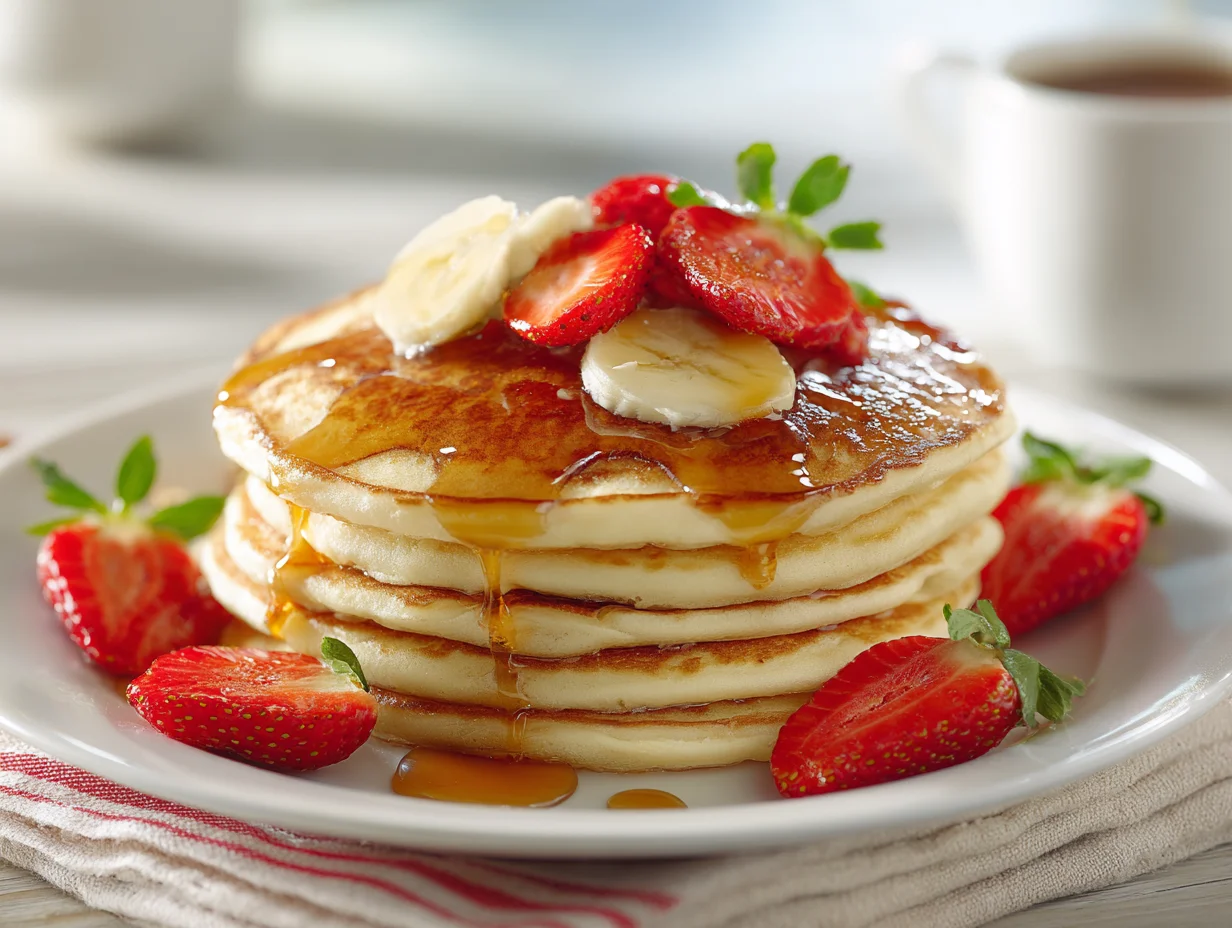
I have tested dozens of homemade pancake recipes over the years, but nothing matches the comfort and satisfaction of recreating the famous IHOP-style pancakes at home. The moment these pancakes hit the warm skillet, the buttery aroma instantly transforms an ordinary morning into a classic diner-style breakfast experience.
What makes this recipe special is the balance of softness, fluffiness, and rich flavor that most homemade versions fail to achieve. After multiple kitchen trials and professional adjustments, I finally perfected a copycat recipe that delivers the same golden texture and cloud,like bite people love from IHOP.
Whether I am preparing breakfast for family gatherings, weekend brunches, or relaxed mornings, this recipe never disappoints. If you enjoy restaurant-quality pancakes made with simple ingredients and reliable chef-level techniques, this homemade IHOP Pancake Recipe Copycat Style deserves a permanent place in your kitchen.
? You might also love this comforting side idea: Homemade Eggnog Recipe (Classic & Creamy).
The Batter Mistake I See Most Often
One mistake I consistently notice while helping people make pancakes is overmixing the batter. Many home cooks believe the batter must be completely smooth before cooking, but that actually creates dense and chewy pancakes instead of the soft, fluffy texture everyone wants.
I always recommend stopping the mixing process as soon as the flour disappears because a few small lumps are completely normal. Another issue I often see is cooking pancakes over high heat. While it may seem faster, excessive heat burns the outside before the center cooks properly.
I also discourage pressing pancakes down with a spatula during cooking because it removes the air pockets responsible for fluffiness. Small preparation habits like these make a major difference in texture, flavor, and appearance, especially when trying to recreate authentic IHOP-style pancakes at home.
My Professional Method for Fluffy IHOP Pancakes
Through experience, I have learned that the secret to restaurant-style pancakes comes from patience and proper technique rather than complicated ingredients. I always allow the eggs, milk, and butter to reach room temperature before mixing because cold ingredients affect texture and rise.
When combining wet and dry ingredients, I stir gently and stop immediately once everything is incorporated. Resting the batter for several minutes is another step I never skip because it helps create softer pancakes with better structure. I also cook pancakes over medium heat instead of rushing the process with high temperatures.
A lightly buttered skillet produces the most beautiful golden surface while keeping the centers soft and moist. Most importantly, I never flatten pancakes while cooking. Allowing the batter to rise naturally creates the airy, tender texture that makes homemade pancakes taste professionally prepared.
Ingredients List

Base Ingredients:
- 2 cups all-purpose flour
- 2 tablespoons granulated sugar
- 2 teaspoons baking powder
- 1 teaspoon baking soda
- ½ teaspoon salt
- 2 large eggs
- 1¾ cups buttermilk
- ¼ cup whole milk
- ¼ cup melted butter
- 1 teaspoon vanilla extract
- Butter for cooking
Optional Add-ins:
- Fresh blueberries
- Chocolate chips
- Banana slices
- Cinnamon powder
- Maple syrup
- Whipped cream
- Chopped pecans
- Strawberry topping
- Powdered sugar
Step-by-Step Instructions

How I Prepare the Dry Ingredients
Whenever I make pancakes, I start by carefully preparing the dry ingredients because this step builds the foundation for texture and consistency. I add the flour, sugar, baking powder, baking soda, and salt into a large bowl, then whisk everything thoroughly to distribute the leavening agents evenly. I never rush this stage because uneven mixing can create inconsistent pancakes where some rise beautifully while others stay flat.
I also recommend measuring flour correctly using a spoon-and-level method instead of scooping directly with the measuring cup, which often packs in excess flour and creates dry batter. Professional kitchens rely heavily on accurate measurements, and homemade recipes benefit from the same attention to detail. Once the dry ingredients are fully combined and aerated, I set the bowl aside and move directly to the wet mixture preparation.
How I Mix the Wet Ingredients
In a separate bowl, I whisk the eggs first until smooth because this helps them blend more evenly into the batter. Then I add the buttermilk, whole milk, melted butter, and vanilla extract while stirring gently until fully combined. I always make sure the melted butter cools slightly before adding it because hot butter can partially cook the eggs and affect the batter consistency. One habit I strongly recommend is using room-temperature ingredients whenever possible.
Through experience, I have noticed that pancakes cook more evenly and rise better when the ingredients are not ice cold. The buttermilk plays a major role in this recipe because it reacts with the baking soda to create the signature fluffy texture associated with IHOP pancakes. Once everything looks smooth and creamy, I prepare to combine the wet mixture with the dry ingredients carefully.
How I Create the Perfect Pancake Batter
This is the stage where I believe most pancake recipes either succeed or fail. I slowly pour the wet ingredients into the bowl of dry ingredients and fold everything together gently using a spatula. I never aggressively stir the batter because overmixing develops gluten and creates heavy pancakes. The batter should look slightly lumpy, and I actually consider that a sign the texture will turn out soft and fluffy. After mixing, I allow the batter to rest for five to seven minutes before cooking.
I learned this technique from professional breakfast kitchens because resting gives the flour time to hydrate while activating the baking ingredients properly. During this period, the batter thickens slightly and develops better structure. I avoid adding extra liquid unless absolutely necessary because maintaining the right consistency is essential for achieving authentic IHOP-style pancakes.
? For a cozy brunch pairing, check out our Moist Blueberry Muffins Recipe Perfect Breakfast Bakery Treat.
How I Cook Pancakes Evenly Every Time
I always use a nonstick skillet or flat griddle placed over medium heat because consistent temperature is critical for evenly cooked pancakes. Before adding batter, I lightly grease the surface with butter for a rich golden finish. I pour about one-fourth cup of batter for each pancake and allow them to cook undisturbed until bubbles begin forming on top.
That visual cue tells me the pancakes are ready to flip. I carefully turn them using a thin spatula and continue cooking until both sides become evenly golden brown. One mistake I never make is pressing pancakes with the spatula because it forces out moisture and destroys the fluffy interior texture. Cooking pancakes slowly over moderate heat produces soft centers and perfectly colored edges. This approach consistently delivers pancakes that taste remarkably close to the classic IHOP breakfast experience.
How I Serve IHOP-Style Pancakes at Home
Once the pancakes are fully cooked, I transfer them immediately onto warm serving plates to preserve their soft texture. I often place a small piece of butter between the pancake layers because it melts beautifully and adds extra richness. For the most authentic diner-style presentation, I drizzle warm maple syrup generously over the stack and finish with toppings like fresh berries, whipped cream, or sliced bananas depending on the occasion.
I personally enjoy serving these pancakes alongside scrambled eggs and crispy breakfast potatoes for a complete breakfast experience. If I am cooking for a larger group, I keep finished pancakes warm inside a low-temperature oven until serving time. Presentation always matters in my kitchen because beautifully served food creates a more enjoyable dining experience. These homemade IHOP-style pancakes consistently impress guests with their soft texture and comforting flavor.
Cook Time
Total: 30 minutes
Prep: 10 minutes
Bake: 20 minutes
Servings
Whenever I prepare this IHOP Pancake Recipe Copycat Style for my family, the recipe comfortably serves four people with generous portions. Depending on pancake size, I usually get around ten to twelve medium pancakes from one batch. For larger breakfast gatherings, I simply double the ingredients because the recipe scales beautifully without affecting texture or flavor. I often make smaller pancakes for children and larger diner-style stacks for brunch presentations.
One reason I love this recipe is its versatility because it pairs perfectly with eggs, fresh fruit, sausage, bacon, or coffee. Despite delivering restaurant-quality flavor, the ingredients remain affordable and pantry-friendly, making the recipe practical for regular breakfasts. Whether I am serving these pancakes during a relaxed weekend brunch or a special family breakfast, they always create a comforting and satisfying meal everyone genuinely enjoys.
Nutritional Information (approx. per serving)
- Calories: 320
- Protein: 8g
- Carbohydrates: 42g
- Fat: 12g
- Saturated Fat: 6g
- Sugar: 9g
- Fiber: 1g
- Sodium: 480mg
- Calcium: 18% DV
- Iron: 10% DV
I appreciate this homemade pancake recipe because it offers better ingredient control compared to many processed pancake mixes. The eggs and dairy ingredients provide protein and calcium, while the homemade preparation avoids unnecessary preservatives and artificial flavors. I often encourage adding fresh fruits, nuts, or berries to increase fiber and nutritional value naturally. Because the pancakes are made from scratch, adjusting sweetness and portion sizes becomes much easier depending on personal preferences.
While pancakes are traditionally considered comfort food, balanced toppings and mindful servings can make them part of a satisfying breakfast routine. I also enjoy the flexibility of this recipe because it allows healthier ingredient substitutions without sacrificing flavor or texture. When paired with fruits or protein-rich breakfast sides, these pancakes provide lasting energy and a comforting homemade breakfast experience.
? If you like quick breakfast ideas, you may also enjoy Peanut Butter Overnight Oats Recipe Easy Breakfast Prep.
Storage Instructions
Whenever I make extra pancakes, I always allow them to cool completely before storing because trapped steam creates unwanted moisture and sogginess. I place parchment paper between each pancake layer and store them inside airtight containers or zip-top bags. In the refrigerator, they stay fresh for up to four days while maintaining good texture and flavor.
For longer storage, I freeze them individually first before transferring them into freezer-safe bags. This prevents sticking and makes reheating easier later. I usually reheat refrigerated pancakes on a skillet over low heat because it restores their softness better than microwaving alone. Frozen pancakes can go directly into a toaster or oven without thawing. I avoid overheating them because excessive heat dries them quickly. Proper storage techniques help preserve the fluffy texture and make busy morning breakfasts much more convenient.
Suggestions
Over the years, I have learned that small adjustments can dramatically improve homemade pancakes. One technique I highly recommend is maintaining medium heat throughout cooking because stable temperature creates evenly golden pancakes without burning. I also prefer using real butter instead of cooking spray because it adds richer flavor and better browning. For extra fluffy pancakes, I occasionally separate the egg whites, whip them lightly, and fold them into the batter before cooking.
If you enjoy seasonal flavors, adding cinnamon, pumpkin puree, or fresh berries works beautifully with this recipe. I also encourage experimenting with toppings like caramelized bananas, honey butter, or toasted pecans for a more premium breakfast presentation. Fresh pancakes always taste best directly from the skillet, so I recommend cooking smaller batches whenever possible. Careful preparation transforms simple homemade pancakes into a truly memorable breakfast experience.
Seasonal Relevance
I enjoy making this IHOP Pancake Recipe Copycat Style throughout the year because it adapts perfectly to every season and occasion. During colder months, I love serving warm pancakes with cinnamon syrup or spiced apple toppings for a comforting breakfast experience. In spring and summer, fresh strawberries, blueberries, and whipped cream create lighter and more refreshing flavor combinations.
Autumn is especially perfect for adding pumpkin spice, nutmeg, or caramelized apples to create cozy brunch meals for family gatherings. I also find these pancakes ideal for birthdays, weekend brunches, Ramadan suhoor meals, and holiday breakfasts because they are affordable, filling, and easy to customize. Since the ingredients are basic pantry staples available year-round, the recipe remains practical in every season. Their versatility and comforting flavor make these pancakes one of my favorite homemade breakfasts regardless of the time of year.
After years of testing pancake recipes, this version remains one of my personal favorites because it consistently delivers the soft texture and buttery flavor people expect from classic IHOP pancakes. The recipe combines simple ingredients with reliable cooking techniques that truly make a difference in the final result. By avoiding common mistakes like overmixing and overheating, anyone can create fluffy, restaurant-style pancakes at home without difficulty.
I especially appreciate how versatile the recipe is because it works equally well for quick weekday breakfasts and elaborate weekend brunches. The comforting aroma, golden appearance, and tender texture make every batch feel special and homemade in the best possible way. Once you try these pancakes fresh from the skillet with warm maple syrup, there is a good chance this recipe will become a permanent favorite in your breakfast routine as well.
? For another sweet morning option, try our Fluffy Vanilla Cake Recipe – Light, Soft and Bakery Style.
Frequently asked questions
1. Can I prepare the pancake batter the night before?
Yes, I sometimes prepare the batter a few hours early and refrigerate it covered. However, I have noticed the fluffiest pancakes usually come from freshly mixed batter because the baking ingredients remain more active. If refrigerated, I stir gently before cooking and avoid excessive mixing to maintain proper pancake texture.
2. Why do my pancakes become dry after cooking?
From my experience, dry pancakes usually result from using too much flour or cooking over excessively high heat. Accurate measurements and medium cooking temperature make a huge difference. I also recommend avoiding overcooking because pancakes continue cooking slightly even after they are removed from the skillet or griddle surface.
3. Can I make these pancakes without buttermilk?
Yes, I have successfully used homemade buttermilk substitutes many times. Simply mix one tablespoon of lemon juice or vinegar into regular milk and let it sit for five minutes before using. While real buttermilk provides the best flavor and texture, this substitute still creates soft and fluffy pancakes with excellent results.
4. Which toppings work best with IHOP-style pancakes?
Personally, I enjoy classic maple syrup and butter the most, but fresh berries, whipped cream, chocolate chips, banana slices, and toasted pecans also pair beautifully. Seasonal fruit toppings work especially well because they add freshness and natural sweetness while making the breakfast presentation look more professional and inviting for guests.
5. Can I freeze leftover pancakes for busy mornings?
Yes, I freeze leftover pancakes regularly because they reheat surprisingly well. After cooling completely, I freeze them individually before storing them in freezer-safe bags. This prevents sticking and allows quick reheating in a toaster or oven. Properly stored pancakes maintain good flavor and texture for several weeks in the freezer.