Pumpkin Roll Recipe
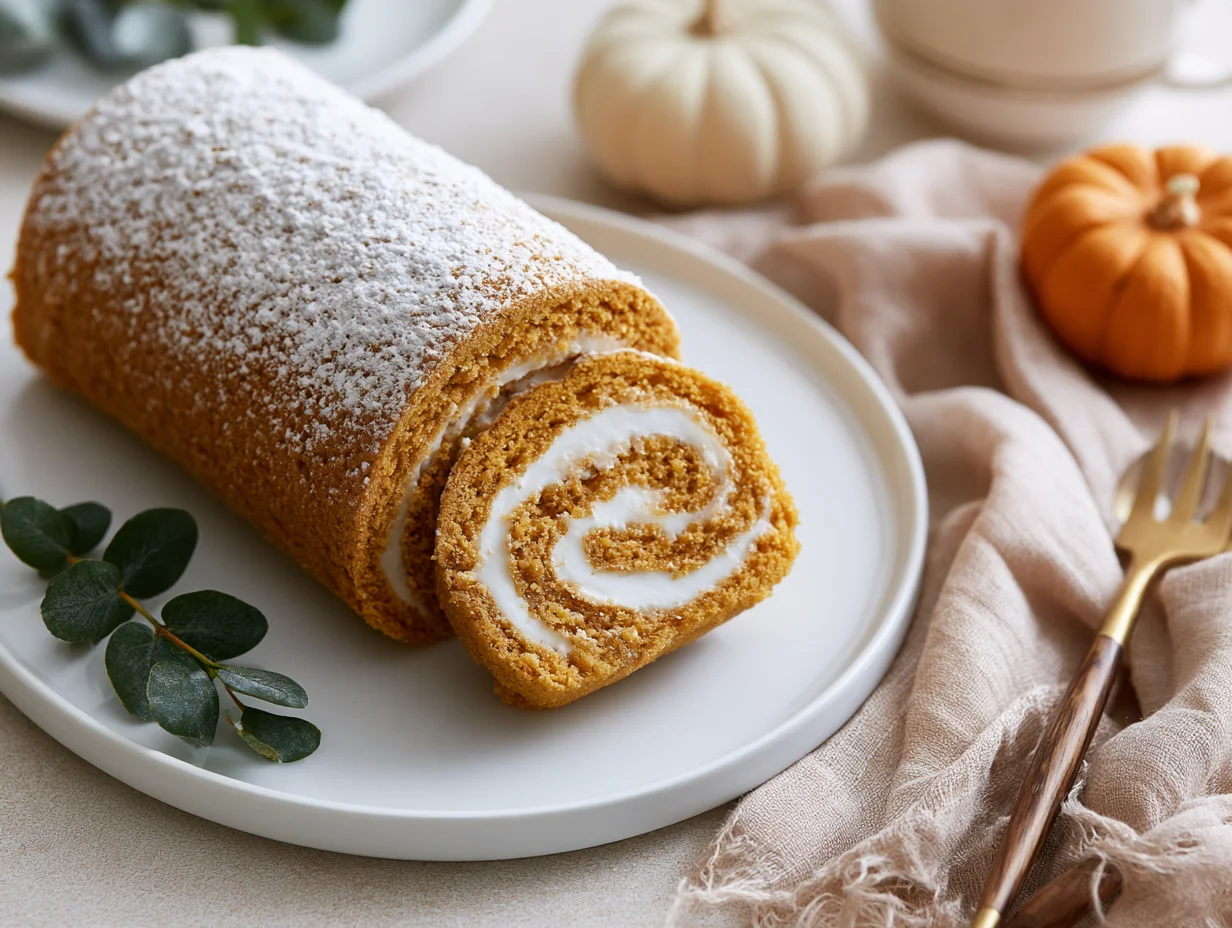
There’s a reason pumpkin roll shows up on more holiday tables than almost any other dessert: it looks like it took hours, yet it comes together with a few bowls, a sheet pan, and a clean kitchen towel. The combination of warm spiced pumpkin cake and tangy cream cheese filling, swirled into a tight spiral, hits a balance that few desserts manage between rustic and refined.
What makes this recipe worth bookmarking isn’t just the flavor. It’s the technique. Rolling a cake without cracking it intimidates a lot of home bakers, but once you understand the timing — rolling while warm, unrolling once cool — the process becomes almost foolproof.
This guide walks through every stage with the precision of a professional kitchen, but explained in plain language. You’ll get exact measurements, real troubleshooting advice, and storage tips that actually extend freshness instead of vague suggestions.
Whether this is your first pumpkin roll or your fifteenth, this version is built to be consistent, moist, and visually impressive enough to anchor any fall or winter dessert table.
Ingredients You’ll Need
Good pumpkin roll lives and dies by ratio, not by fancy ingredients, and that’s exactly why this recipe has earned a permanent spot in so many recipe boxes. Here’s everything you need, broken down clearly so there’s no second-guessing at the mixing bowl.
Base Ingredients
- 3/4 cup all-purpose flour
- 1/2 teaspoon baking powder
- 1/2 teaspoon baking soda
- 1/2 teaspoon salt
- 1 teaspoon ground cinnamon
- 1/2 teaspoon ground ginger
- 1/4 teaspoon ground nutmeg
- 1/4 teaspoon ground cloves
- 3 large eggs
- 1 cup granulated sugar
- 2/3 cup canned pumpkin puree
- 1 cup powdered sugar (for dusting the towel)
- 8 ounces cream cheese, softened
- 6 tablespoons unsalted butter, softened
- 1 cup powdered sugar (for filling)
- 1 teaspoon vanilla extract
Optional Add-ins
- 1/2 cup chopped toasted pecans
- 1/2 cup chopped walnuts
- 1/4 teaspoon orange zest
- 2 tablespoons mini chocolate chips
- 1/4 teaspoon maple extract
- 2 tablespoons crystallized ginger, finely chopped
Step-by-Step Instructions
Prepare the Pan and Dry Ingredients
Preheat your oven to 375°F. Line a 15×10-inch jelly roll pan with parchment paper, then grease the parchment lightly. In a medium bowl, whisk together the flour, baking powder, baking soda, salt, cinnamon, ginger, nutmeg, and cloves. Set this mixture aside. Having everything measured and ready before you start mixing wet ingredients keeps the batter from sitting too long, which helps the cake stay light and prevents it from deflating before it even reaches the oven.
Mix the Batter
In a large bowl, beat the eggs and granulated sugar together for about three minutes, until the mixture turns pale and slightly thickened. Stir in the pumpkin puree until fully combined. Gently fold in the dry ingredients in two additions, mixing just until no streaks of flour remain. Overmixing at this stage develops gluten unnecessarily, which can make the finished cake tougher and more prone to cracking when you roll it later.
Bake the Cake
Spread the batter evenly into the prepared pan, smoothing it into the corners with an offset spatula. Bake for 13 to 15 minutes, until the cake springs back when touched lightly in the center. Watch the clock closely here; pumpkin roll bakes thin and fast, and even two extra minutes can dry it out. While it bakes, lay a clean kitchen towel on the counter and dust it generously with powdered sugar.
Roll the Warm Cake
As soon as the cake comes out of the oven, run a knife around the edges and invert it onto the sugared towel. Peel off the parchment paper carefully. Starting from the short end, roll the cake and towel together into a tight spiral. Place the rolled cake seam-side down on a wire rack and let it cool completely, about one hour. Rolling it warm trains the cake to hold its shape later.
Make the Filling
While the cake cools, beat the softened cream cheese and butter together until completely smooth, with no lumps remaining. Add the powdered sugar and vanilla extract, then beat again until the filling is light and spreadable. If you’re using mix-ins like chopped pecans or crystallized ginger, fold them in by hand now. Keep the filling at room temperature so it spreads easily without tearing the cooled cake later.
Fill and Re-Roll
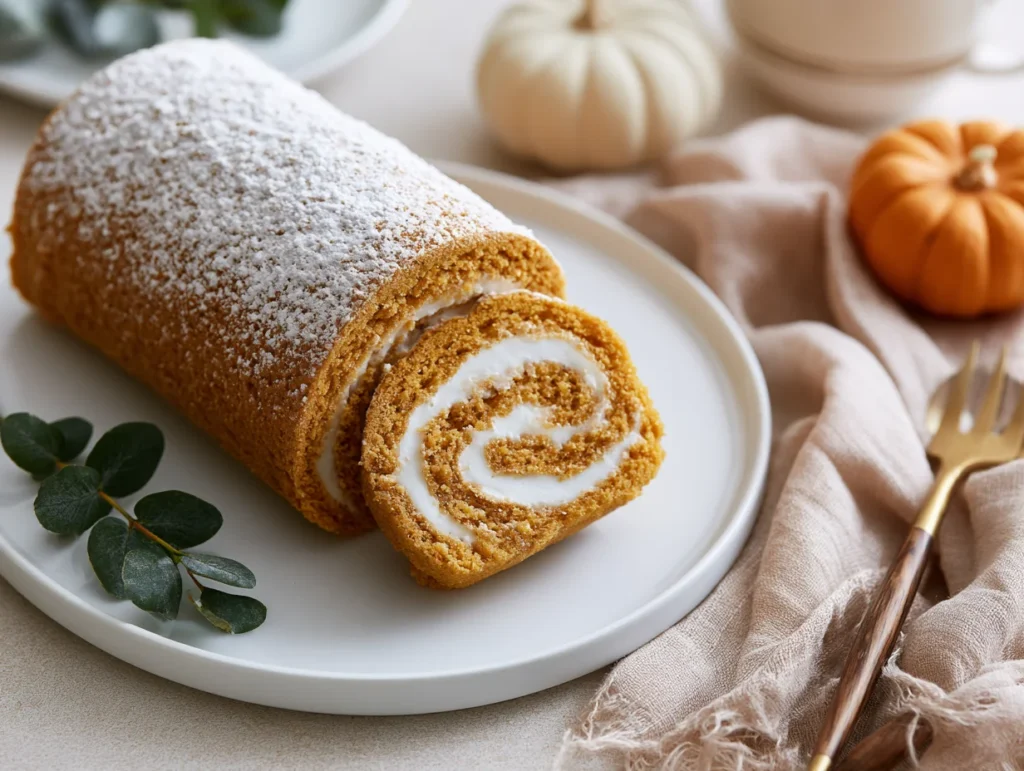
Once the cake has cooled fully, gently unroll it from the towel and lay it flat. Spread the cream cheese filling evenly across the surface, leaving a small border around the edges. Using the towel as a guide, re-roll the cake without it this time, rolling tightly from the same short end. Wrap the finished roll in plastic wrap and refrigerate for at least one hour before slicing and serving.
Cook Time
Total
2 hours 15 minutes (including cooling and chilling time)
Prep
25 minutes
Bake
14 minutes
Servings
This recipe makes approximately 10 to 12 slices, depending on how thick you cut each piece. A standard jelly roll pan produces a log roughly 15 inches long, which slices cleanly into even rounds perfect for a dessert table or holiday buffet.
For lighter portions, such as serving alongside other desserts at a larger gathering, you can cut the roll into 14 thinner slices without sacrificing presentation. Each piece still holds its spiral shape beautifully when sliced with a sharp, clean knife.
If you’re scaling this for a crowd, the recipe doubles well using two separate pans rather than one oversized one, since thinner cakes roll more reliably than thicker ones baked in a single large sheet.
Common Mistakes in This Recipe
The most frequent issue bakers run into is rolling the cake after it has already cooled. Pumpkin cake loses its flexibility quickly once it drops to room temperature, and trying to roll a cold cake almost guarantees visible cracks along the surface, especially at the center fold.
Another common mistake is overbaking. Because this cake is thin, it can go from perfectly done to dry within just a couple of minutes. A dry cake has far less flexibility and becomes brittle the moment you try to shape it.
Skipping the powdered sugar on the towel is a smaller but still significant misstep. Without it, the warm cake sticks to the fabric, tearing the surface when you try to unroll it later for filling.
Finally, spreading cold, stiff cream cheese filling onto the cake often pulls the delicate crumb apart instead of gliding smoothly across it, leaving an uneven, torn finish.
Solutions to Common Mistakes
To avoid rolling issues, always roll the cake into the towel within one to two minutes of pulling it from the oven, while it’s still hot and pliable. This sets the cake’s shape memory before it has a chance to firm up.
Set a timer and check the cake at the 13-minute mark rather than waiting for the full bake time listed. The cake is done as soon as it springs back lightly when touched, not when it looks fully golden.
Always dust the towel generously and evenly with powdered sugar before inverting the cake onto it. This creates a non-stick barrier that allows the cake to release cleanly when you’re ready to unroll it.
Let your cream cheese filling sit at true room temperature, soft enough to spread with light pressure, before applying it to the cooled cake to prevent tearing.
Nutritional Information (approx. per serving)
- Calories: 245 kcal
- Carbohydrates: 32g
- Protein: 3g
- Fat: 12g
- Saturated Fat: 6g
- Cholesterol: 70mg
- Sodium: 180mg
- Sugar: 24g
- Fiber: 1g
Pumpkin itself brings real nutritional value to this dessert, offering a notable amount of vitamin A along with beta-carotene, which supports eye health and immune function even in a treat designed for indulgence.
The warming spices used throughout, particularly cinnamon and ginger, contain antioxidant compounds and have traditionally been associated with supporting digestion, making this a slightly more functional dessert than a plain sugar-based cake.
Eggs contribute protein and choline to the recipe, helping balance out the sugar content with a nutrient that supports muscle repair and cognitive function, which is a small but meaningful addition.
Because the cake layer itself is relatively low in fat compared to the rich filling, portion control allows you to enjoy a full, satisfying slice without the heaviness typical of denser holiday desserts.
Storage Instructions
Pumpkin roll stores exceptionally well in the refrigerator, which actually works in its favor since the cream cheese filling needs to stay chilled. Wrap the finished roll tightly in plastic wrap, then place it in an airtight container or wrap it a second time in foil for extra protection against drying out.
Stored this way, the cake stays fresh and flavorful for up to five days in the refrigerator, with the flavors actually deepening slightly after the first day as the spices settle into the filling.
For longer storage, pumpkin roll freezes remarkably well. Wrap the unsliced roll in plastic wrap, then a layer of foil, and freeze for up to two months without noticeable texture loss.
When you’re ready to serve a frozen roll, thaw it overnight in the refrigerator rather than at room temperature, which helps the cream cheese filling firm back up properly before slicing.
Suggestions
Serve each slice slightly chilled rather than at full room temperature, since the firmer texture holds the spiral shape better and makes for cleaner, more attractive presentation on the plate.
A light dusting of powdered sugar just before serving adds visual polish without altering the flavor profile, and it’s the same finishing touch you’ll see used in professional bakery presentations.
Pair slices with a simple cup of spiced chai, coffee, or even a small glass of dessert wine, all of which complement the warm spice notes in the cake without overwhelming the cream cheese filling.
For a more dramatic presentation at gatherings, slice the roll on a slight diagonal rather than straight across, which displays the spiral pattern more prominently and makes each piece feel a bit more refined.
Seasonal Relevance
Pumpkin roll is, unsurprisingly, most closely associated with autumn and the broader holiday season, appearing frequently on Thanksgiving and Christmas dessert tables alongside pies and other spiced classics.
That said, the ingredients themselves aren’t seasonally restrictive. Canned pumpkin puree is shelf-stable and available year-round, which means there’s no real reason to limit this dessert to just a few months of the calendar.
Many bakers find that pumpkin roll works just as well as a late-summer transition dessert, easing into the warm spice flavors of fall before the rest of the seasonal baking lineup arrives.
Because it’s lighter than a traditional layer cake, this dessert also holds up well at spring gatherings or potlucks, offering familiar comfort flavors without feeling overly heavy for warmer weather.
Final Words
Pumpkin roll rewards patience more than it rewards complicated technique. Once you understand the timing of rolling warm and unrolling cool, the rest of the process becomes almost routine, even for bakers who don’t consider themselves particularly experienced.
What makes this recipe worth returning to year after year is its balance. The cake is spiced but not overwhelming, the filling is rich but not cloying, and the presentation feels far more impressive than the actual effort required.
This is the kind of dessert that builds confidence in the kitchen. Once you’ve successfully rolled one cake without cracking it, the technique transfers easily to other rolled desserts down the line.
Keep this recipe in your regular rotation, not just for holidays, and don’t be afraid to experiment with the optional add-ins once you’ve mastered the base version.
Frequently Asked Questions
Can I make pumpkin roll ahead of time for a holiday gathering?
Yes, this is actually ideal. Pumpkin roll tastes better after chilling for at least a few hours, and it can be made up to two days ahead, wrapped tightly, and stored in the refrigerator until you’re ready to serve it.
Why did my cake crack even though I rolled it warm?
Cracking usually points to slight overbaking or rolling too loosely. Make sure you’re checking doneness at the earliest suggested time, and roll the warm cake firmly and quickly into the towel for the best flexible structure.
Can I use fresh pumpkin instead of canned puree?
Yes, but drain it thoroughly first. Fresh roasted pumpkin holds significantly more water than canned puree, and that extra moisture can make the batter too wet, affecting both texture and how well the cake rolls.
Pumpkin Roll Recipe
10
servings25
minutes14
minutes245
kcal29
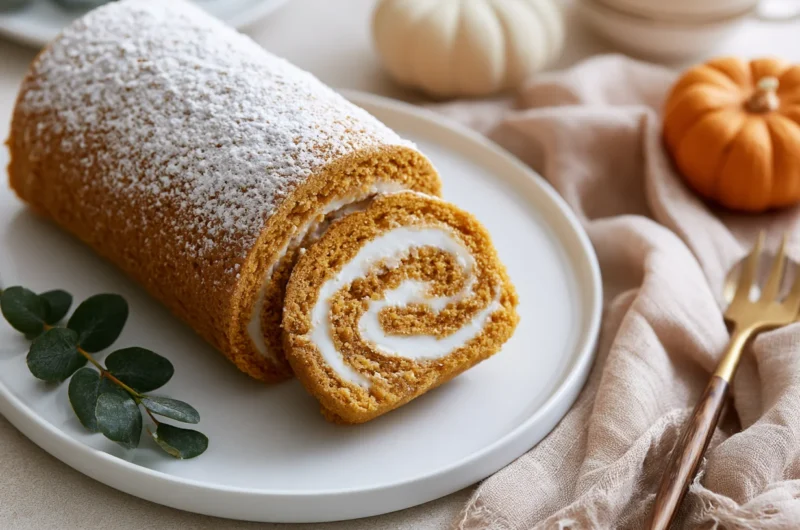
minutesA moist, spiced pumpkin cake rolled around a silky cream cheese filling. This classic fall dessert looks bakery-made but comes together with simple pantry staples and one easy rolling technique.
Ingredients
Base Ingredients:
3/4 cup all-purpose flour
1/2 teaspoon baking powder
1/2 teaspoon baking soda
1/2 teaspoon salt
1 teaspoon ground cinnamon
1/2 teaspoon ground ginger
1/4 teaspoon ground nutmeg
1/4 teaspoon ground cloves
3 large eggs
1 cup granulated sugar
2/3 cup canned pumpkin puree
1 cup powdered sugar (for dusting the towel)
8 ounces cream cheese, softened
6 tablespoons unsalted butter, softened
1 cup powdered sugar (for filling)
1 teaspoon vanilla extract
Optional Add-ins:
1/2 cup chopped toasted pecans
1/2 cup chopped walnuts
1/4 teaspoon orange zest
2 tablespoons mini chocolate chips
1/4 teaspoon maple extract
2 tablespoons crystallized ginger, finely chopped
Directions
- Preheat oven to 375°F and line a 15×10-inch jelly roll pan with greased parchment paper.
- Whisk together flour, baking powder, baking soda, salt, cinnamon, ginger, nutmeg, and cloves; set aside.
- Beat eggs and granulated sugar for 3 minutes until pale and thickened.
- Stir in pumpkin puree, then fold in dry ingredients in two additions until just combined.
- Spread batter evenly into the pan and bake 13-15 minutes until it springs back when touched.
- Dust a clean kitchen towel generously with powdered sugar while the cake bakes.
- Invert the hot cake onto the towel, peel off parchment, and roll tightly from the short end.
- Cool the rolled cake completely on a wire rack, about 1 hour.
- Beat cream cheese and butter until smooth, then add powdered sugar and vanilla; beat until fluffy.
- Fold in any optional mix-ins by hand.
- Unroll the cooled cake, spread filling evenly leaving a small border, and re-roll without the towel.
- Wrap tightly and refrigerate at least 1 hour before slicing and serving.
Recipe Video
Notes
- Roll the cake while it’s still warm — cooling first causes cracking.
- Check doneness at 13 minutes; this thin cake overbakes quickly.
- Bring cream cheese filling to true room temperature for smooth, tear-free spreading.
- Store wrapped in the refrigerator up to 5 days, or freeze up to 2 months.
- Thaw frozen rolls overnight in the fridge, not at room temperature.